Market Overview
Ras Al Khaimah's manufacturing and industrial sector is growing steadily, on rising industrial output, expanding export capacity and increasing foreign investment. Investor-friendly regulation, competitive operating costs and expanding industrial zones have made it one of the UAE's most attractive destinations for manufacturing and industrial expansion.
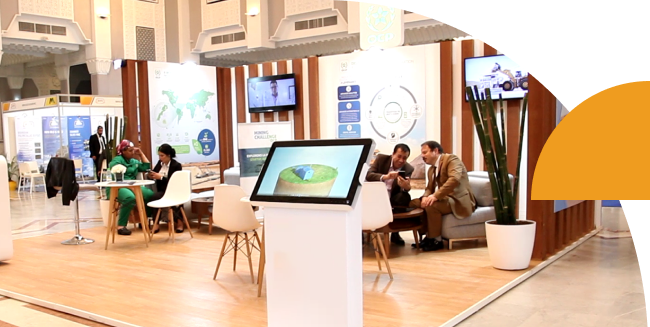
Manufacturing is the base of the economy, not a diversification project
Manufacturing contributes around 30% of the emirate's GDP — a share that puts it well ahead of most of the region, and which explains why industrial policy, land allocation and utility planning here are made with factories in mind.
That foundation was built across cement, ceramics, glass, pharmaceuticals, advanced materials and export-oriented production. RAK Ceramics is among the world's largest tile manufacturers; Stevin Rock runs one of the largest quarrying operations anywhere; and the emirate's pharmaceutical and chemicals producers sit alongside them in the same industrial zones.
An unusually international company base
More than 15,000 companies from over 100 countries operate in the emirate, and RAKEZ — the free zone — hosts more than 13,000 industrial and commercial businesses on its own estate. Few markets of this size have a supply chain drawn from that many places.
For an exhibitor, it changes who is at the stand: the buyer is as likely to be a subsidiary sourcing for a group elsewhere as a local plant, and the partnership conversation is often about distribution or joint venture rather than a single order.
Output is aimed outward
Exports exceed AED 7.5 billion a year, and manufacturers based here serve more than 150 international markets. Saqr Port and the emirate's logistics links are a large part of why: bulk export capacity is on the doorstep of the quarries and cement plants that use it.
Export competitiveness is therefore not an abstract theme. Tariffs, standards, certification and freight cost decide whether a line here can compete in the markets it ships to, which is why they get their own conference track.
Aligned with Operation 300bn
The UAE's national industrial strategy — Operation 300bn — sets out to raise the industrial sector's contribution to the national economy, and the emirate's incentives, zones and regulation are pointed the same way. For a manufacturer weighing an expansion, that alignment is what makes the incentive picture legible several years out.
It is also what brings policymakers, free zone authorities and regulators onto the floor rather than only onto the stage: much of what they are deciding is being built by the companies exhibiting.
Industry 4.0 is where the productivity is
Automation, robotics, industrial IoT and digital twins have moved past the pilot stage in the region's larger plants. Adoption is uneven, and the useful conversations are about where they actually pay back — on which lines, at what capital cost, and how long it took to get the workforce with them.
Smart factories and industrial automation have their own focus sector on the exhibition floor for that reason, alongside the materials and heavy industry they serve.
Clean technology and the circular economy
The UAE's net-zero 2050 commitment reaches manufacturing through energy cost, emissions reporting and customer requirements rather than through any single regulation. Renewable supply, waste-to-value processing, material recovery and closed-loop production are all being priced by manufacturers on ordinary commercial terms.
The practical question for most plants is not whether to decarbonise but how to do it without moving the cost base — which is the angle the sustainability track at the conference takes.

Frequently Asked Questions
Why is Ras Al Khaimah a manufacturing market worth attending?
Manufacturing accounts for around 30% of the emirate's GDP, more than 15,000 companies from over 100 countries operate here, exports exceed AED 7.5 billion a year, and the industrial zones are still expanding. It is a producing market as well as a buying one.
Which sectors does the exhibition cover?
Seven: building materials; heavy industries; advanced manufacturing; chemicals and pharmaceuticals; clean technologies; smart factories and industrial automation; and sustainable manufacturing and the circular economy.
Who makes the buying decisions in this market?
Plant owners and operations leads specify; procurement and strategic sourcing teams buy; investors fund the expansion; and government bodies, free zone authorities and regulators set the framework for all three. Every one of those groups is on the floor, and the Hosted Buyer Programme exists specifically to put them in front of exhibitors.
How does Make It In Ras Al Khaimah fit alongside the region's other industrial events?
Make It In Ras Al Khaimah is the emirate's own platform: focused on Ras Al Khaimah's manufacturers, its industrial zones, its investors and its regulators, rather than a regional overview.